Showing posts with label news. Show all posts

Wednesday, 19 September 2012

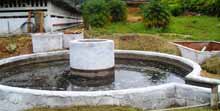
A cross-section model of the patented mini biogas Plant by TISTR

A cross-section model of the patented mini Biogas Plant by Thailand Institute of Science and Technological Research ( (TISTR)


A cross-section model of the patented mini biogas Plant


A cross-section model of the patented mini biogas unit developed by the Thailand Institute of Science and Technological Research gives an idea of how it works. The unit can process 15 kilogrammes of household waste per day into biogas.
A research and development project of the Thailand Institute of Science and Technological Research (TISTR), the mini biogas unit covers a space of one square metre, roughly the size of a refrigerator or washing machine.


Source: bangkokpost.com/business/economics/313002/biogas-production-goes-home

Friday, 24 August 2012

Biogas plant under construction in Poland

Biogas Plant Under Construction in Poland

Vechta, Germany based organic waste to biogas technology supplier, Weltec Biopower has begun construction of a 2.4 MW biogas plant in Darzyno, Poland.

The company said that once complete the anaerobic digestion facility will be used to produce biogas from a mixture of liquid manure maize and, which will be supplied by farmers from the vicinity. The plant will also process potato waste of a chip manufacturer.

Four tanks with a capacity of 5000 cubic meters each provide sufficient space for the digestate.

The company explained that the substrates at the plant - located 80km from Danzig - will be fed into the four 4438 cubic meters stainless-steel fermenters via the four storage tanks and a 50 cubic metres dosing feeder.

The facility will be operated by utility company NEWD, which has previously only operated wind farms, but is now developing the country's first biogas plant with Weltec's polish subsidiary, Weltec Polska.

According to Weltec, the conditions in Poland are ideal for generating biogas, with an agricultural area of around 18.5 million hectares - 1.5 million hectares more than Germany. Liquid manure from cattle, pigs, poultry and other renewable raw materials are readily available as substrate for biogas plants.

The company added that the infrastructure conditions in Poland are also ideal, with subsidised decentralised power and heat generation, and a highly developed infrastructure for the transport of gas and district heat.

Furthermore, Weltec said that Poland's government is currently implementing policies for the development of decentralised energy supply through laws and directives - especially for biomass and biogas.

Through the 'Biogas Development Programme 2010-2020', Poland is aiming to have at least one agricultural biogas plant installed in every municipality by 2020 - there are approximately 2500 municipalities.`

source: www.waste-management-world.com

Monday, 20 August 2012

A Biogas Research Institute will be established at the University of Agriculture Faisalabad

A Biogas Research Institute will be established at the University of Agriculture Faisalabad

A Biogas Research Institute will be established at the University of Agriculture Faisalabad (UAF) in collaboration with Biogas Institute of Ministry of Agriculture, (BIOMA) and People’s Republic of China. This was revealed during a meeting of UAF scientists with 4-member Chinese delegation headed by Ren Xiaobin, Deputy Director, Training and Information Research Centre BIOMA in New syndicate Hall of UAF here on Thursday.
UAF Vice Chancellor Dr Iqrar Ahmad welcomed the members of Chinese delegation and hoped that the proposed project would become a milestone for research and development activities in the field of renewable energy in the country. Dr Iqrar lauded the efforts of Punjab Chief Minister Muhammad Shahbaz Sharif for the promotion of research and development activities in the energy sector. He maintained that due to the absence of appropriate R&D mechanism, Pakistan could not have exploited its potential in renewable energy sector. He said that during last 35 years more than 7,000 biogas plants were set up but due to non-availability of sufficient human resource the system could not be sustained.
Mr Ren Xiaobin while addressing the scientists, said that Pakistan had great potential to generate renewable energy particularly through biogas. He urged the scientists to adopt latest technology in order to develop a sustainable environment friendly energy production in the country.
He said that BIOMA had set up 65 projects in various countries and provided training facility to 560 workers and experts. He added that BIOMA would provide all sort of technical assistance for the establishment of proposed Research Institute. Delegation also visited various sites of alternate energy.

Monday, 30 April 2012

Biogas: Pakistan’s energy crises solution


Biogas: Pakistan’s energy crises solution


BEING ONE of the top and important country in the world in terms of food products, textile, medicine, nuclear and variety of other sectors, Pakistan is still facing energy crisis from almost last 7 years having a short fall of minimum 5000 MW. This crisis will never end rather increase with every second being passed. Recently, Pakistanis has been ranked the fourth most intelligent nation in the world but still they cannot find the way to meet their energy demands. The reason behind this is the lack of good leadership, illiteracy, excessive use of fossil fuels and other political issues. Now, in these conditions the only way of survival and to overcome this problem is that we stop blaming and relying on the government or other private energy sector’s policies and start thinking to solve it by alternative methods. Full Article Biogas: Pakistan’s energy crises solution

Saturday, 28 April 2012

Weltec Biopower builds biogas plant in France

Weltec Biopower GmbH has started construction of a biogas plant in France,

Weltec Biopower GmbH has started construction of a biogas plant in France, scheduled for commissioning in October. The plant, nearly 60 miles northwest of Nantes, will include a 3,052-cubic-meter fermenter, along with a separator, solid matter dosing feeder, two storage tanks, a digestate storage unit and a pump station.

Upon completion, the 526 kilowatt plant will use pig manure along with food industry waste, regenerative raw material and agricultural residue. A farming operation provided the site for the plant and will also provide the ag residue feedstock for the fermenter. Exhaust heat produced by the biogas plant will dry the digestate and provide a source of heat for the pig operation at the site. According to Weltec, a feed-in tariff in France ensures that the country will purchase power from all biogas plants at a set price for 15 years.

Weltec is also working on a biogas facility in Germany—the largest in the country—that will use raw materials and pig manure from roughly 30 farms. On average, farmers associated with the facility will not have to travel farther than nine miles to deliver their substrate product. The biogas plant will feature four fermenters, six digestate storage units and one liquid reservoir, all of which will be piped into a natural gas grid. The facility is set for commissioning in December.

Synergy Biogas Generates Renewable Energy

Synergy Biogas Generates Renewable Energy

Synergy Biogas Generates Renewable Energy on N-Y stat's first co digestion biogas energy plant using animal and food waist to produce biogas, Synergy Biogas Generates 1.5 mega watts of renewable energy electricity for daily operation and grids

Synergy Biogas – largest on-farm digester in NY!

Mixed-waste anaerobic digestion and renewable energy facility at the 2,000-cow Synergy
Dairy in the Town of Covington, Wyoming County, NY
Synergy Biogas will produce more than 10,000 MWh/year (electricity to power more than 1,000 homes) —and is the first independently owned and operated biogas plant located on a
NY dairy farm
Synergy Biogas is designed specifically for co-digestion of manure with food grade organic waste
Synergy Biogas – largest on-farm digester in NY!

Mixed-waste anaerobic digestion and renewable energy facility at the 2,000-cow Synergy Dairy in the Town of Covington, Wyoming County, NY  Synergy Biogas will produce more than 10,000 MWh/year (electricity to power more than 1,000 homes) —and is the first independently owned and operated biogas plant located on a NY dairy farm Synergy Biogas is designed specifically for co-digestion of manure with food grade organic waste


Synergy Biogas, New York's largest on-farm biogas project, generates renewable energy for nearly 1,000 homes. CH4 Biogas LLC built, owns and operates the project under the name Synergy Biogas LLC.

Saturday, 14 April 2012

Gases: Biogas & Electric Cuts Emissions from Anaerobic Digesters

Gases: Biogas & Electric Cuts Emissions from Anaerobic Digesters


Biogas & Electric, located in San Diego, California, has developed technology that reduces harmful emissions created during anaerobic digestion.

Anaerobic digestion may serve as a renewable energy source, and reduce methane when utilized at wastewater treatment plants, dairies, and landfills. Seth Burns was intrigued by benefits of turning waste to a resource, but realized one of the biggest challenges for the anaerobic digester industry was to reduce the harmful emissions generated by the process.

Stringent standards enforced by the California Air and Resources Board (CARB), and other regional air boards require the reduction of oxides of nitrogen (NOx) emitted during the anerobic digestion process. NOx is known to cause an array of health problems including asthma.

In an effort to make the anaerobic digestion process more environmentally sound, Mike Matelich, process chemist and inventor of the process, and Burns partnered to develop a way to reduce NOx and SOx emissions.

The technology is an add-on solution to the biogas engine. The add-on puts the biogas engine exhaust in contact with the liquid waste stream from the anaerobic digester.

“Mike determined that certain chemicals are endogenous to the waste stream, such as ammonia, which can scrub the NOx out of the exhaust stream,” stated Burns.

The bench scale prototype chemical reaction that occurs reduces NOx and SOx, the precursors to smog and acid rain respectively, by greater than 95% each.

Burns and Matelich hope to replicate these results in the field at full scale. The following diagram outlines the process:

U.S. Patent No. 8,012,746, entitled “NOx Removal Systems for Biogas Engines at Anaerobic Digestion Facilities,” describes the Biogas and Electric technology (’746 Patent).

According to Burns, a provisional patent application was filed at the end of December 2009. The non-provisional, filed September 15, 2010, enjoyed accelerated examination via the now-defunct U.S. Patent and Trademark Office’s Green Technology Pilot Program (GTPP) (read about some fast track alternatives post-GTPP here). The ’746 Patent issued September 6, 2011, just under a year from the non-provisional filing date.

The company has received funding from USDA-NIFA SBIR Phase I and Phase II research grants and from Waste Management. A full-scale dairy-based demonstration project is being constructed in Imperial County, California. The technology will be utilized on a 300 kW biogas engine.

Previous technologies have only been able to reduce NOx to 9ppm, but Burns and Matelich are confident that their technology will be able to reduce NOx emissions enough to meet the stringent CARB standard of 2 ppm.

Burns and Matelich plan to build a demo project within the wastewater treatment industry, and begin installing their solution for revenue.
Source: www.greenpatentblog.com

Monday, 2 April 2012

Biogas News | Apple to Build 5 MW Biogas Fuel Cell at Maiden Data Center

Apple to Build 5 MW Biogas Fuel Cell at Maiden Data Center


Apple has filed its plans to build the 5 MW fuel cell project in Maiden, North Carolina, that will utilise biogas to offset its natural gas use and qualify as a renewable facility.

According to Apple's 2012 Facilities Report, the commissioning of its new data center in Maiden is part of its commitment to reduce the environmental impact of its facilities through energy efficient, green building design.

The company said that the facility is exceptionally energy efficient and has earned the coveted LEED Platinum certification from the U.S. Green Building Council.

The recently completed Maiden facility is where the computing giant supports services such as its iCloud online data storage system and its SIRI voice-recognition software.

Data center's are notoriously hungry for energy. To meet the energy needs of the Maiden facility with high-percentage renewable energy mix, Apple said that it has embarked on a renewable energy program.

As part of this program, the company is building a fuel cell installation that it said, when online later in 2012, will be the largest non-utility fuel cell installation operating anywhere in the country.
Apple to Build 5 MW Biogas Fuel Cell at Maiden Data Center
The 5 MW facility, located directly adjacent to the data center, will be powered by 100% biogas, and provide more than 40 million kWh of 24x7 baseload renewable energy annually.

Additionally, Apple is building the nation's largest end user-owned, onsite solar array on the land surrounding the data center. When completed, this 100 acre, 20 MW facility will supply 42 million kWh of clean, renewable energy annually.

Energy efficient design features:
  • A chilled water storage system to improve chiller efficiency by transferring 10,400 kWh of electricity consumption from peak to off-peak hours each day
  • Use of "free" outside air cooling through a waterside economiser operation during night and cool-weather hours, which, along with water storage, allows the chillers to be turned off more than 75% of the time
  • Extreme precision in managing cooling distribution for cold-air containment pods, with variable-speed fans controlled to exactly match air flow to server requirements from moment to moment
  • Power distributed at higher voltages, which increases efficiency by reducing power loss.
  • White cool-roof design to provide maximum solar reflectivity
  • High-efficiency LED lighting combined with motion sensors
  • Real-time power monitoring and analytics during operations
  • Construction processes that utilised 14% recycled materials, diverted 93% of construction waste from landfills, and sourced 41% of purchased materials within 500 miles of the site.
According to a report by the News & Observer of Raleigh, the facility will likely utilise biogas from landfill or some another source to offset its natural gas use and qualify as a renewable facility.

While Apple has not officially commented on the choice technology partner for the project, Tech news website, GigaOM reported that it is "pretty sure" the company will go with Sunnyvale, California based fuel cell manufacturer, Bloomenergy, which recently launched its 'Mission Critical Systems Practice'.

Data centers require very high availability. In a statement related to the launch of the Mission Critical Systems Practice, vice president, Peter Gross explained:

"Bloom Energy will now fill a critical need in the data center industry. By providing a reliable, clean and stable energy source that is immune to disruptions to the grid, Bloom will help its customers reduce their security risks considerably, while at the same time improving efficiency and cutting greenhouse gas emissions."

According to Bloomenergy, its fuel cell modules are currently used by Walmart, Google, Staples, eBay, Cox Enterprises, FedEx, Bank of America, Coca-Cola, AT&T and Adobe, according to Bloom's web site.

Solid oxide fuel cells

According to Bloomenergy, legacy fuel cell technologies like proton exchange membranes (PEMs), phosphoric acid fuel cells (PAFCs), and molten carbonate fuel cells (MCFCs), have all required expensive precious metals, corrosive acids, or hard to contain molten materials.

While Some modifying such systems to supply combined heat and power (CHP) does improve the economic value proposition, it only really does so in environments with exactly the right ratios of heat and power requirements on a 24/7/365 basis. Everywhere else, the company claimed that the cost, complexity, and customisation of CHP tends to outweigh the benefits.

The company said that for some time Solid Oxide Fuel Cells (SOFCs) hold the greatest potential of any fuel cell technology. With low cost ceramic materials, and extremely high electrical efficiencies, SOFCs can deliver attractive economics without relying on CHP.

However, while operating at temperatures typically over 800 degrees C the technology offers extremely high electrical efficiency, and fuel flexibility, these characteristics have also thrown up challenges that have led to the technology being difficult to commercialise.

According to the company breakthroughs in materials science, combined with it innovative new design, have enabled it to offer a cost effective, all-electric solution SOFC system.

The company offers the 100 kW ES-5400 and the 200 kW ES-5700.

Both systems operate using the same technology, where the electrolyte is a solid ceramic material. The anode and cathode are made from special inks that coat the electrolyte. No precious metals, corrosive acids, or molten materials are required.

Next, the company said that an electrochemical reaction converts fuel and air into electricity without combustion.

At high temperature, warmed air enters the cathode side of the fuel cell and steam mixes with fuel to produce reformed fuel, which then enters the anode side.

Then the chemical reaction begins in the fuel cell. As the reformed fuel crosses the anode, it attracts oxygen ions from the cathode. The oxygen ions combine with the reformed fuel to produce electricity, water, and small amounts of carbon dioxide.

The company said that the water gets recycled to produce the steam needed to reform the fuel. The process also generates the heat required by the fuel cell.


Tuesday, 28 February 2012

Biogas From Kino


A local factory owner running his plant of bio gas
 Kot Momin—There exists huge potential of Biogas production in the country, especially in rural areas, where the energy needs of domestic and industrial users can be met through this easily available and inexpensive source. this would also help reduce the energy shortages in the country. This was stated by the Chief Executive Officer (CEO), Alternative Energy Development Board (AEDB), Mr. Arif Alauddin while briefing a team of  journalists accompanying him on a visit to local Kino Factories.
Mr. Alauddin reiterated that the existing energy crisis in the country was more serious than anticipated; in fact, that was only one dimension of the picture, considering 40% people in Pakistan are without electricity and 60% without natural gas, and yet they pay five times more than the people in urban centres to meet their energy needs.
He said that the country during the last three years made significant progress in power generation through alternative / renewable energy (ARE) resources including waste to energy / biomass. He said that private sector, local and foreign both were being facilitated for investment worth billions of dollars in ARE sectors annually, as Pakistan offered lucrative fiscal and financial incentives to investors in this sector.
He said that a World Bank funded project for carrying out detailed study for Biomass / Waste-to-Energy projects in 20 cities of Pakistan had been initiated. Technical proposals had been evaluated by AEDB, and are now awaiting the World Bank concurrence to award the project. Another Waste to Energy Study, funded by USTDA is being carried out for Karachi to generate 10 MW power. He said that AEDB had also issued a LoI to set up a 12MW Biomass to Energy power project in Sindh, based exclusively on Agricultural Waste. The project is jointly sponsored by investors from US and local entrepreneurs, the SSJD Bio Energy. Another LoI has been issued to M/s Lumen Energia Pvt Ltd. to set up an 11MW power plant at Jhang, based on Agricultural Waste like cotton stalk, rice husk, sugarcane trash / bagasse, wheat chaff and other crops as multi-fuel sources.

He further said that 85 sugar mills in Pakistan, possessing cumulative potential to generate up to 3000MW of power through Bagasse are being assisted / facilitated / encouraged to meet their power requirements through the resources already available with them. He recalled that 27 MW of Biomass / Waste to Energy plant was already operational, and PPA for 15 MW had been signed between PESCO and Al-Moiz Industries, D. I. Khan; a 7MW of Biogas / Waste to Energy projects’ PPA also signed between FESCO and Shakarganj Sugar Mills, Jhang. I addition to that 11 New Waste to Energy Projects (165 MW) awarded Generation License by NEPRA; Tariff for JDW Sugar Mills (Private) Limited, Mauza Sharin Jamaluddin Wali Rahim Yar Khan (Bagasse+Imported Coal) 80 MW granted; 14000 biogas plants are being installed through RSPN with the cost of Rs. 356 Million (Dutch Grant) in the country; 9 RDF / WTE plants are operational. 6 are in advanced stages of implementation in all the provinces.
Mr. Saleem Ranjha a senior government official, and local resident / farmer the moving spirit behind the effort to promote industrial and domestic uses of biogas in the tehseel Kot Momin has been supporting the AEDB endeavors. He told that there were around 250 registered kino factories in the area, and each of these factories requires 250-500kv of power to run a factory. And by meeting power requirements of these factories there required 6-12 mw of electricity for 5 months. By converting them on biogas the factories would not only meet their requirements through local resources but would be able to provide energy for the remaining 7 months for domestic / other uses in the area. The gas is also being used for cooking purposes, and a large number of households were now turning to biomass.
Mr. Arif said that Pakistan is the second largest cattle producing country in the world after India. AEDB along with other ARE technologies is The Sargodha district known for its milk and citrus producing potential would be provided to the local industrialists and growers. He appreciated the manufacturers of the machinery for their contribution in the RE sector.
He said that the kino sector, fetching over $100miliions’ foreign exchange to the country would be supported in adopting clean ARE technologies. He said that AEDB is looking into possibilities for quick deployment of biodiesel technology initially in Sargodha district, where besides kino chilling houses would take advantage of the technology for milk storage.
He said the residue that is left behind after processing of gas from gober (dung) is being used in the area as a fertilizer which had been giving excellent results in growth of plant / fruits.
A local factory owner running his plant of bio gas told that with a cost of only seven lacs of rupees his 200 kw generator / plant was running for 16 hours a day with a capacity of 70 heads dung. Previously, he was using 360 litre of diesel per day costing him around Rs. 36, 000 per day. Now he was saving 75% of diesel giving him a net saving of Rs. 27,000/ per day. He told that after installation of another plant of same capacity, which was under construction, he would be able to meet his 100% energy resources through biomass. He told that the fertilizer he was making had been used by farmers and found more effective than other urea /DAP.

Tuesday, 31 January 2012

Biogas news, Pakistan | Call to set up biogas plants

MULTAN: Biogas plant and production engineer Muneeb Iqbal said that biogas is a cheep source of energy and urged people to set up biogas plants. Talking to APP, he asked people to set up plants in cities which can fulfil their gas and electricity needs cheeply. He said fertiliser could also be produced through biogas plants. Muneeb Iqbal said he had also successfully experimented biogas plants to operate generators for tube-wells and small floor mills. He added that work had also been started to provide electricity to the industry through biogas plants.

Friday, 27 January 2012

BIOGAS NEWS: Cuba to Build A Hundred Modern Biogas Plants

Cuba to Build A Hundred Modern Biogas Plants

Cuba to Build A Hundred Modern Biogas Plants


[Cuba to Build A Hundred Modern Biogas Plants.] Havana, Cuba, Jan 27.- Cuba will build 100 cutting-edge tubular biogas plants out of PVC in an effort to reduce the negative environmental impact generated by pig manure.

The plants will generate fuel to meet the energy needs of rural areas, thus preventing pathogenic microorganisms contained in animal wastes from contaminating the subsoil and the aquifer.

Roberto Sosa, director of the Biogas Promotion and Development Center of the Pig Research Institute told the press that one of the plants will have the capacity to process the waste of up to 150 pigs and to supply gas to the producer’s house and his neighbors.

Sosa said that thanks to a training provided to biogas producers, they are now able to assess microbiological and energetic parameters.

Meanwhile, the director of the Center for the Study of Process Engineering, Ileana Pereda Reyes noted that using the PVC technology will make the plants more resistant to blows or cracking.

The biogas is used for the generation of electricity and gas by using animal, vegetal or human solid wastes. It became popular in Third World countries due to the need to obtain cheap energy for cooking.

At present, biogas is widely employed in industrialize nations such as Germany, Sweden and Italy as an economic and renewable source of energy that reduces carbon dioxide release. (ACN)

source:
http://www.cadenagramonte.cu